
Texas State Capitol

John H. Houghton
House
John H. Houghton
House
The John H. Houghton House was one of the larger, more elegant residences built in the late nineteenth century in the Capitol area. Its original owner, John H. Houghton, a prominent Austin businessman, employed James Wahrenberger, who was an architect of note in central Texas, to design the house. As the surrounding city has changed during the twentieth century, the Houghton House has remained one of the major historical and architectural symbols reflecting life in Austin in the late nineteenth century.
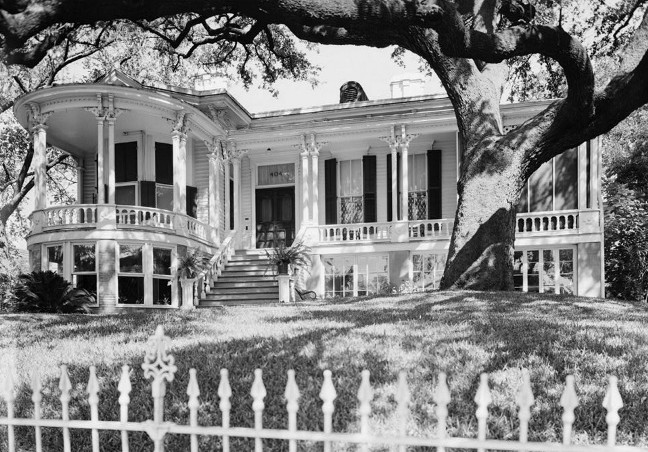
The Eugene Bremond House is one of six residences located on the same city block and built either by a Bremond or Robinson, prominent Austin businessmen of the last century. This block was a neighborhood in itself with a common area in the center reserved for a playground for the children of the related families. Of these six residences, all but one were designed and built by the Austin contractor, George Fiegel. The tract is still known as "the Bremond Block." The house is a good example of the Victorian style.

C. F. Millett developed a profitable lumber supply business in Austin during the Reconstruction era. His establishment included a steam saw and planing mill and along with the usual sash and doors he manufactured furniture for local sale. With the advent of widespread prosperity during the last quarter of the century, Millett diversified his business interests by constructing Millett's Opera House and adjacent to it, Milletts' Mansion. The Mansion was one of the many similar boarding houses erected in Austin at the time in response to the needs of a prosperous traveling public. It had the appearance of a town house and was designed in the conservative Victorian fashion then in vogue. It may be considered as a representative example of that building type, now since vanished from the American scene.

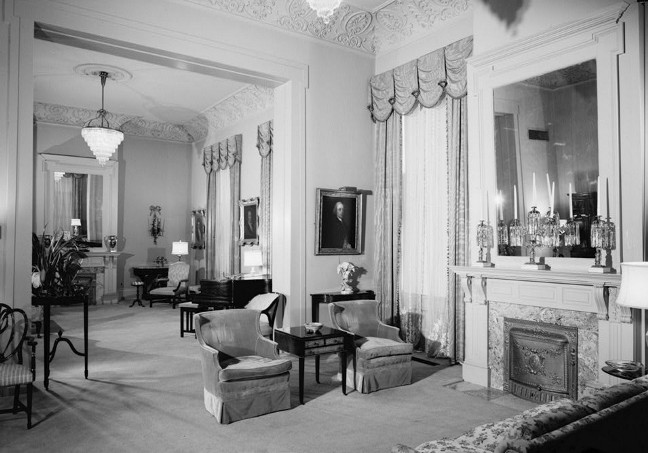
Reception Room,
Governor's Mansion
Alabama
Alaska
Arizona
Arkansas
California
Colorado
Connecticut
Delaware
Florida
Georgia
Hawaii
Idaho
Illinois
Indiana
Iowa
Kansas
Kentucky
Louisiana
Maine
Maryland
Massachusetts
Michigan
Minnesota
Mississippi
Missouri
Montana
Nebraska
Nevada
New
Hampshire
New
Jersey
New
Mexico
New
York
North
Carolina
North
Dakota
Ohio
Oklahoma
Oregon
Pennsylvania
Rhode
Island
South
Carolina
South
Dakota
Tennessee
Texas
Utah
Vermont
Virginia
Washington
West
Virginia
Wisconsin
Wyoming
Washington
D.C.
Home